Effects of an exercise intervention in overweight or obese children
DOI:
https://doi.org/10.12820/rbafs.31e0441Palabras clave:
Pediatric obesity, Physical exercise, Biomarkers, Child healthResumen
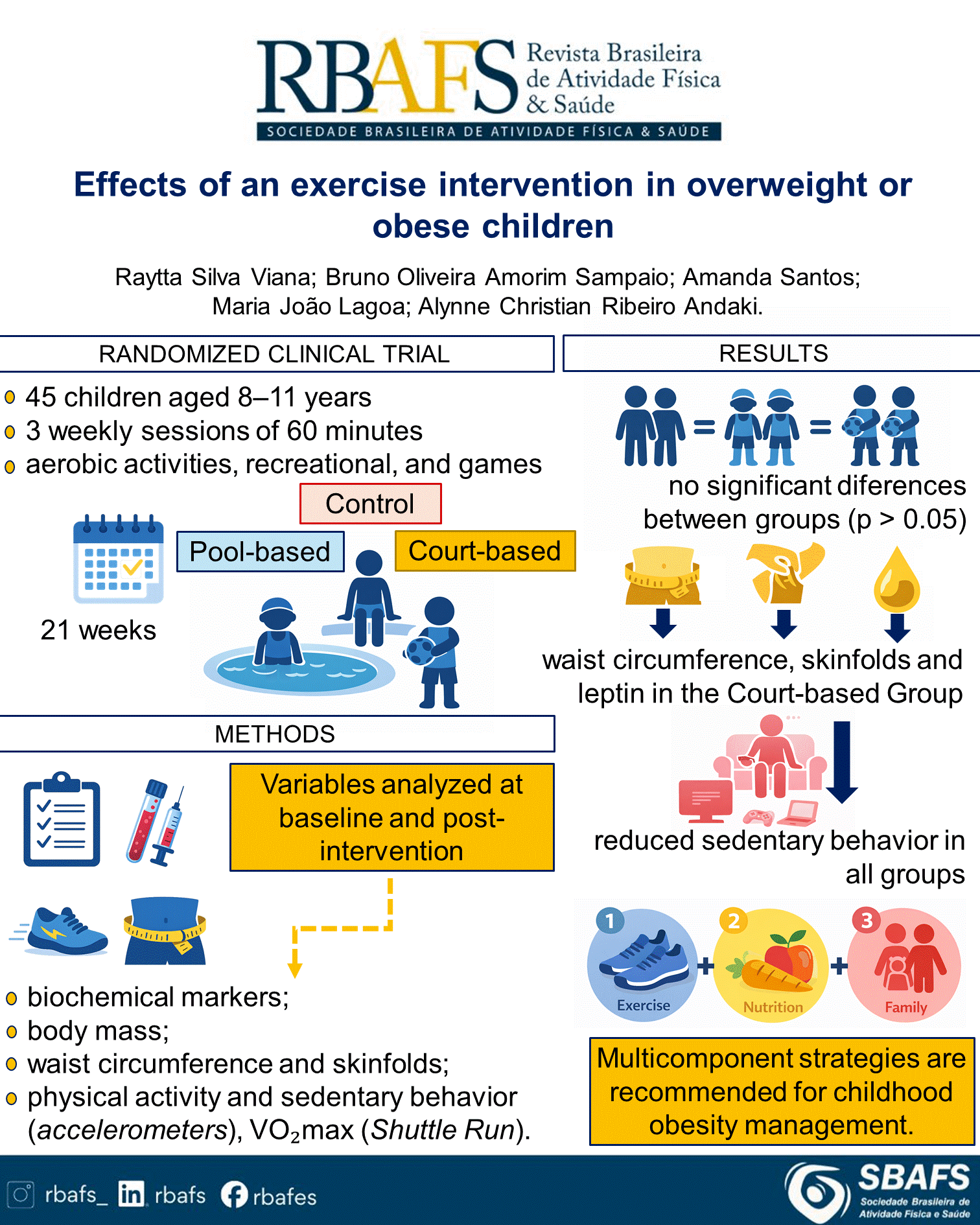
Objective: To evaluate the effects of a physical exercise intervention on anthropometric, biochemical, and cardiorespiratory fitness parameters in overweight and obese children. Methods: A randomized controlled trial was conducted with 45 schoolchildren aged 8–11 years from public schools in Uberaba, Minas Gerais, Brazil. Participants were allocated into a control group (n = 22) and two intervention groups: court-based (n = 11) and pool-based (n=12). The 21-week program included three weekly 60-minute sessions of aerobic, recreational, and game-based activities. Outcomes included body mass, body mass index, waist circumference, skinfolds, physical activity and sedentary behavior (accelerometers), VO2max (Shuttle Run), and biochemical markers (cholesterol, HDL-c, LDL-c, triglycerides, glucose, leptin, adiponectin). Analyses were performed using two-way repeated measures ANOVA (group × time) (p < 0.05). Results: The sample was mostly female (55.1%) with a mean age of 9.1 ± 1.0 years. No significant between-group differences were found for anthropometric, biochemical, or fitness outcomes (p > 0.05). The court-based group showed reductions in waist circumference and leptin, while both intervention groups showed reductions in triceps skinfold thickness, although these changes were not statistically significant. No significant group × time interaction effects were observed for physical activity or sedentary behavior variables. Conclusions: Short-term exercise-only interventions did not produce significant changes in the studied parameters. Future studies should investigate whether different intervention structures, durations, and complementary components may lead to different results in childhood obesity management.
Descargas
Citas
1. World Health Organization (WHO). Prevalence of obesity among children and adolescents aged 5 to 19 years [Internet]. Geneva: WHO; 2024. Available from: https://data.who.int> [2025 August].
2. Nogueira-de-Almeida CA, Weffort VRS, Ued FV, Ferraz IS, Contini AA, Martinez EZ, et al. What causes obesity in children and adolescents? J Pediatr (Rio J). 2024;100 Suppl 1:S48-56. DOI: https://doi.org/10.1016/j.jped.2023.09.011
3. NCD Risk Factor Collaboration (NCD-RisC). Global, regional, and national prevalence of overweight and obesity in children and adolescents, 1990–2021, with projections to 2050: a forecasting study for the Global Burden of Disease Study 2021. Lancet. 2025;405(10481):785-812.
4. Santos FDP, Silva EAF, Baêta CLV, Campos FS, Campos HO. Prevalence of childhood obesity in Brazil: a systematic review. J Trop Pediatr. 2023;69(2):fmad017. DOI: https://doi.org/10.1093/tropej/fmad017
5. Putri RR, Danielsson P, Ekström N, Ericsson A, Lindberg L, Marcus C, et al. Effect of pediatric obesity treatment on long-term health. JAMA Pediatr. 2025;179(3):302-9. DOI: https://doi.org/10.1001/jamapediatrics.2024.5552
6. Cao M, Tang Y, Li S, Zou Y. Effects of school-based high-intensity interval training on body composition, cardiorespiratory fitness and cardiometabolic markers in adolescent boys with obesity: a randomized controlled trial. BMC Pediatr. 2022;22(1):112. DOI: https://doi.org/10.1186/s12887-021-03079-z
7. Wang C, Chen X, Li H, Zhao Y, Xu F, Zhou Y, et al. Physical activity interventions for cardiopulmonary fitness in obese children and adolescents: a systematic review. BMC Pediatr. 2023;23:4381. DOI: https://doi.org/10.1186/s12887-023-04381-8
8. Poulos A, Kulinna PH. A cluster randomized controlled trial of an after-school playground curriculum intervention to improve children’s physical, social, and emotional health: study protocol for the PLAYground project. BMC Public Health. 2022;22(1):1658. DOI: https://doi.org/10.1186/s12889-022-13991-3
9. Irandoust K, Taheri M, H'mida C, Rodrigues Neto G, Trabelsi K, Ammar A, et al. Exergaming and aquatic exercises affect lung function and weight loss in obese children. Int J Sports Med. 2021;42(6):566-72. DOI: https://doi.org/10.1055/a-1372-3612
10. Liao T, Zheng C, Xue J, Wang YT. Effects of aquatic and land high-intensity interval trainings on selected bio- and physiological variables among obese adolescents. Front Endocrinol. 2024;15:1381925. DOI: https://doi.org/10.3389/fendo.2024.1381925
11. Ferreira FA, Santos CC, Palmeira AL, Fernandes RJ, Costa MJ. Effects of swimming exercise on early adolescents’ physical conditioning and physical health: a systematic review. J Funct Morphol Kinesiol. 2024;9(3):158. DOI: https://doi.org/10.3390/jfmk9030158
12. García-Hermoso A, Ramírez-Vélez R, Saavedra JM. Exercise, fitness and cardiometabolic risk in children and adolescents. Br J Sports Med. 2019;53(1):10–6.
13. Ortega FB, Ruiz JR, Castillo MJ, Sjöström M. Physical fitness in childhood and adolescence: a powerful marker of health. Int J Obes (Lond). 2008;32(1):1–11. DOI: https://doi.org/10.1038/sj.ijo.0803774
14. World Health Organization. Growth reference data for 5–19 years: BMI-for-age (5–19 years). Geneva: World Health Organization; 2007. Available from: <https://www.who.int/tools/growth-reference-data-for-5to19-years/indicators/bmi-for-age> [2025 August].
15. Groslambert A, Hintzy F, Hoffman MD, Dugué B, Rouillon JD. Validation of a rating scale of perceived exertion in young children. Int J Sports Med. 2001;22(2):116-9. DOI: https://doi.org/10.1055/s-2001-11340
16. World Health Organization. Waist circumference and waist-hip ratio: report of a WHO expert consultation, Geneva, 8–11 December 2008. Geneva: World Health Organization; 2011. Available from: <https://www.who.int/publications/i/item/9789241501491> [2025 August].
17. Guedes DP. Recursos antropométricos para análise da composição corporal. Rev Bras Educ Fís Esp. 2006;20:115 9.
18. Evenson KR, Catellier DJ, Gill K, Ondrak KS, McMurray RG. Calibration of two objective measures of physical activity for children. J Sports Sci. 2008;26(14):1557-65. DOI: https://doi.org/10.1080/02640410802334196
19. Brito JP, Seabra A, Silva R, Figueiredo P, Marques E, Lopes H, et al. The multistage 20-m shuttle run test for predicting VO₂peak in 6–9-year-old children: a comparison with VO₂peak predictive equations. Am J Hum Biol. 2022;34(8):e23809. DOI: https://doi.org/10.3390/biology11091356
20. IBM Corp. IBM SPSS Statistics for Windows, Version 24.0. Armonk, NY: IBM Corp.; 2016.
21. Gao Y, Chen L, Zhang C, Liu J, Ma R, Jiang H, et al. Benefits of physical activity on cardiometabolic diseases in obese children and adolescents. Int J Environ Res Public Health. 2022;19(23):16194. DOI: https://doi.org/10.2478/jtim-2022-0041
22. Seo YG, Lim H, Kim YM, Ju YS, Lee HJ, Jang HB, et al. The effect of a multidisciplinary lifestyle intervention on obesity status, body composition, physical fitness, and cardiometabolic risk markers in children and adolescents with obesity. Nutrients. 2019;11(1):137. DOI: https://doi.org/10.3390/nu11010137
23. Valerio G, Bernasconi S. A multi-etiological model of childhood obesity: a new biobehavioral perspective for prevention? Ital J Pediatr. 2019;45(1):172. DOI: https://doi.org/10.1186/s13052-019-0762-3
24. Cordellat A, Padilla B, Grattarola P, García-Lucerga C, Crehuá-Gaudiza E, Núñez F, et al. Multicomponent exercise training combined with nutritional counselling improves physical function, biochemical and anthropometric profiles in obese children: A pilot study. Nutrients. 2020;12(9):2723. DOI: https://doi.org/10.3390/nu12092723
25. Nie Y, Xiong F, Wang H, Yang F, Chen J. Application of combined dietary and exercise intervention in pediatric obesity and its impact on anthropometric measurements and blood lipid parameters. J Multidiscip Healthc. 2025;18:3455-64. DOI: https://doi.org/10.2147/JMDH.S521927
26. Seabra A, Brito J, Figueiredo P, Beirão L, Seabra A, Carvalho MJ, et al. School-based soccer practice is an effective strategy to improve cardiovascular and metabolic risk factors in overweight children. J Pediatr. 2020;222:190-196.e1.
27. Machado E, Jannuzzi F, Telles S, Oliveira C, Madeira I, Sicuro F, et al. A recreational swimming intervention during the whole school year improves fitness and cardiometabolic risk in children and adolescents with overweight and obesity. Int J Environ Res Public Health. 2022;19(24):17093. DOI: https://doi.org/10.3390/ijerph192417093
28. Petkeviciene J, Klumbiene J, Kriaucioniene V, Raskiliene A, Sakyte E, Ceponiene I. Anthropometric measurements in childhood and prediction of cardiovascular risk factors in adulthood: Kaunas cardiovascular risk cohort study. BMC Public Health. 2015;15:218. DOI: https://doi.org/10.1186/s12889-015-1528-5
29. Chung S. — Growth and puberty in obese children and implications of body composition. J Obes Metab Syndr. 2017;26(4):243-50. DOI: https://doi.org/10.7570/jomes.2017.26.4.243
30. Putri RR, Danielsson P, Marcus C, Hagman E. — Height and Growth Velocity in Children and Adolescents Undergoing Obesity Treatment: A Prospective Cohort Study. J Clin Endocrinol Metab. 2023;108(12):e-314-e320. DOI: https://doi.org/10.1210/clinem/dgad419
31. Men J, Zhu G, Li Y, Wu S, Yu Z, Wang P, et al. Impact of exercise on cardiovascular disease risk in overweight or obese children and adolescents: a systematic review and meta-analysis. BMC Sports Sci Med Rehabil. 2025;17(1):225. DOI: https://doi.org/10.1186/s13102-025-01228-w
32. Dias KA, Ingul CB, Tjønna AE, Keating SE, Gomersall SR, Follestad T, et al. Exercise and vascular function in child obesity: a meta-analysis. Pediatrics. 2015;136(3):e648-59. DOI: https://doi.org/10.1542/peds.2015-0616
33. Viana RS, Reis MM, Santos A, Lagoa MJC, Andaki ACR. Qualidade de vida em crianças obesas participantes de um programa de intervenção com exercícios físicos. Ciênc. Mov. 2020;22(43):103–12. DOI: https://doi.org/10.15602/1983-9480/cm.v22n43p103-112
Descargas
Publicado
Cómo citar
Número
Sección
Licencia
Derechos de autor 2026 Raytta Silva Viana, Bruno Oliveira Amorim Sampaio, Amanda Santos, Maria João Lagoa, Alynne Christian Ribeiro Andaki

Esta obra está bajo una licencia internacional Creative Commons Atribución 4.0.
Al enviar un manuscrito a la Revista Brasileira de Atividade Física & Saúde, los autores mantienen la titularidad de los derechos de autor sobre el artículo y autorizan a la Revista Brasileira de Atividade Física & Saúde a publicar este manuscrito bajo la Licencia Creative Commons Atribución 4.0 e identificarla como el vehículo de su publicación original.